Less Pipe, More Clearance: Rethinking the 3.6L WK2 Exhaust
Why we cut back the Granite Grand's rear exhaust, abandoned the simple Flowmaster plan, and built a tucked-up system around the bumper instead.
The exhaust wasn’t something we were trying to build around a horsepower number. It was in the way.
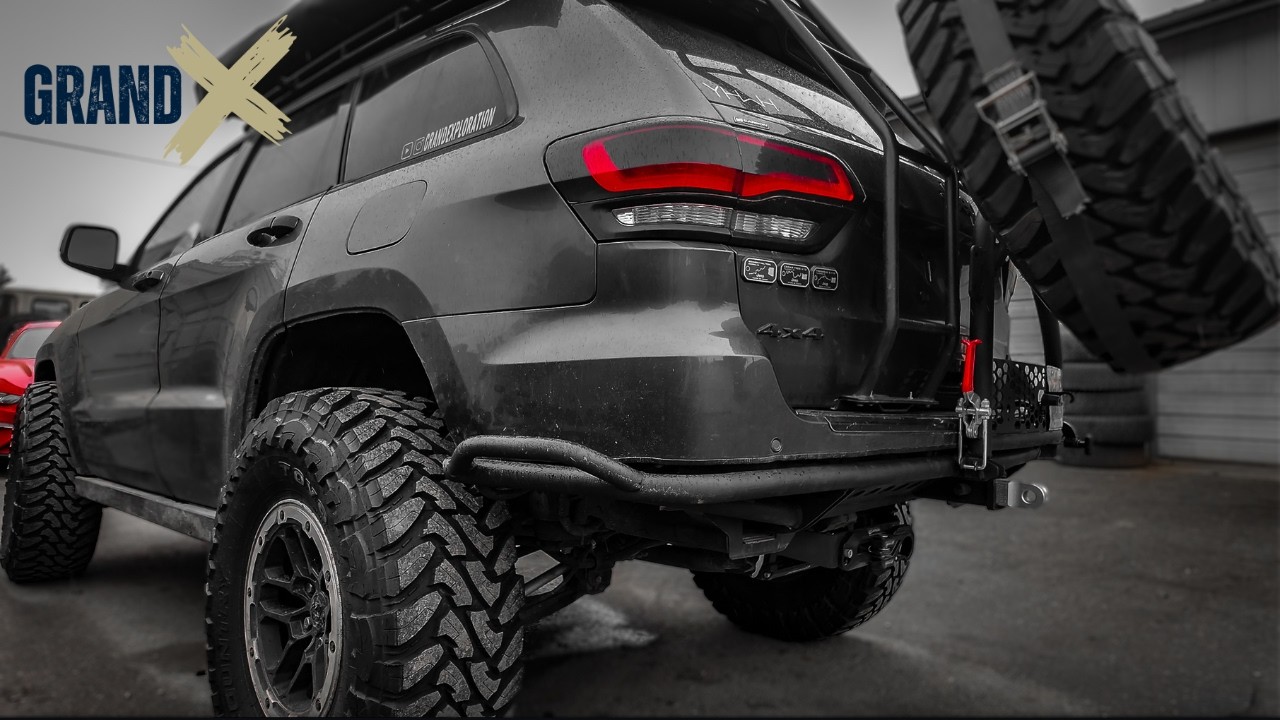
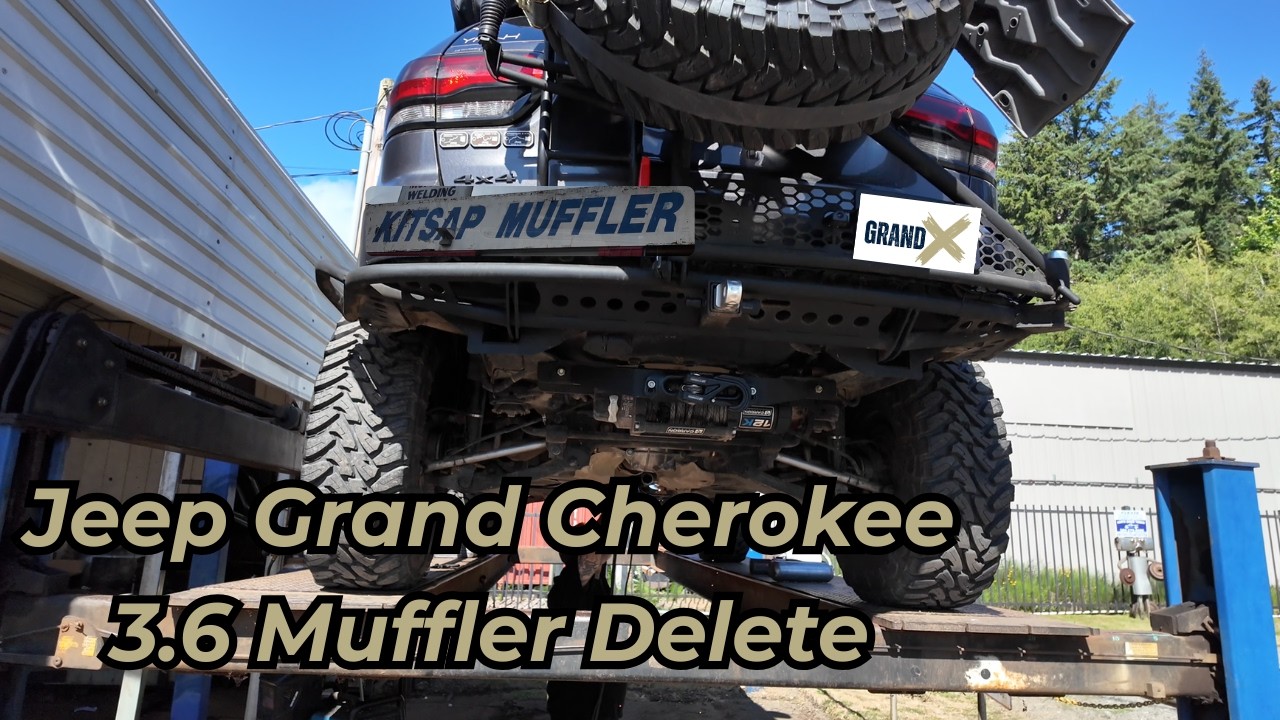
After the 6 Monkeys high-clearance rear bumper went on the Granite Grand, the original tailpipe was suddenly conspicuous: a low-hanging piece of metal beneath a bumper we had just spent time making less likely to hit the ground. Jon cut the offending section back. That fixed the immediate clearance problem, and the 3.6-liter V6 sounded unexpectedly good with the shortened exhaust.
The next idea was to install a Flowmaster 40 Series. What we ended up doing was more useful than following that plan blindly.
The bumper made the stock tailpipe look like the wrong part
The new bumper improved the back of the Jeep in the places that mattered off road. But if the exhaust still hangs below it, the pipe becomes the next thing to hit a ledge.
Cutting the tailpipe shorter made the rear look cleaner. It also changed the sound, which is where the Flowmaster idea came from. But we weren’t interested in fitting an aggressive muffler just to make an already-heavy V6 Jeep loud.
There were two requirements: keep the exhaust above the most vulnerable part of the rear departure path, and don’t create the kind of highway drone that wears you down before the trail even starts.
Why the Flowmaster didn’t just bolt in
At Overland Truck Store, we got the Jeep up and looked at the available space. The driveshaft, rear suspension, hitch structure and bumper all dictated the pipe route. We talked through cutting at an existing flange, turning the exhaust around the driveline and positioning a muffler without losing the clearance we’d just gained.
A 40 Series muffler was not a small can that could be dropped into any gap. Its body and the required angles made the first layout difficult. The amount of bending needed around the driveshaft and the height of the outlet were the sticking points.
This was the moment to stop thinking of it as a muffler installation and start thinking of it as an exhaust-fabrication job.
We built around the exit, then worked forward
Kitsap Muffler took a different approach. Rather than asking where one specific muffler could be forced in, we started with where the tailpipe needed to finish. Tucked above the rear bumper line and away from the obstacles, the exit dictated the rest of the routing.
The fabrication conversation covered a roughly 2.5-inch pipe, resonators, and a Y-shaped junction. The Y-junction was part of an idea to make future work easier. Jon had talked about additional drivetrain changes, and a layout that could later accommodate a second exhaust side had appeal. We did not convert the Jeep to dual exhaust during this job.
The important dimension wasn’t a catalog part number. It was the actual available space with the Jeep on the lift and the suspension, driveline and rear bumper in front of us.
A V6 can sound worse before it sounds better
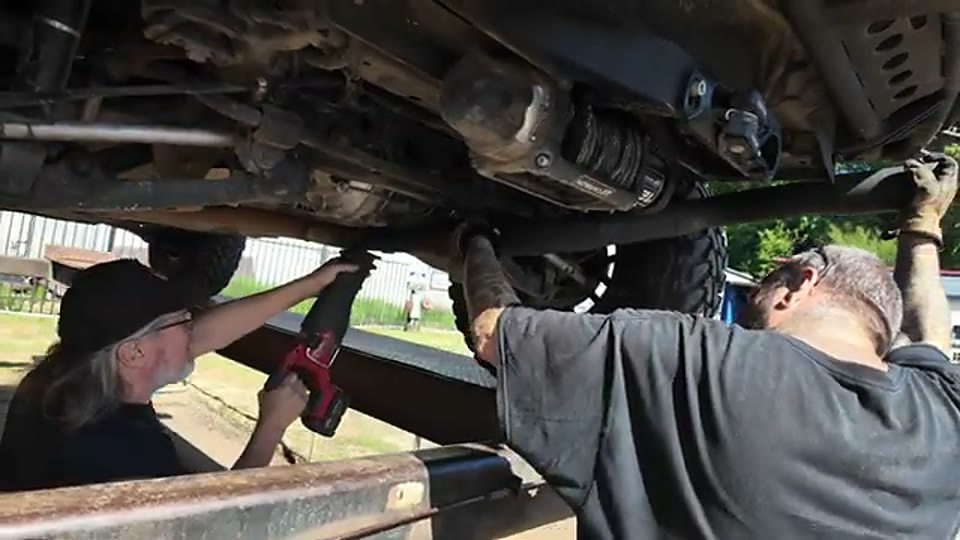
With the exhaust temporarily open beneath the vehicle, we fired the Jeep up and listened. It wasn’t as nasty as expected, but the shop made a point worth understanding: the pipe was dumping under the body.
The underside reflects sound. A pipe ending there doesn’t tell you exactly what the same setup will sound like with a finished tailpipe exiting at the rear. Moving the outlet changes the way the noise reaches the cabin and the people outside it.
Jon wanted a little burble and character, not something loud and raspy simply because the 3.6 is a six-cylinder. The discussion turned to using resonators to take the edge off the frequencies we didn’t want while keeping the sound that made the shortened pipe interesting.
This is why the change in plan matters. We listened first, made a decision about the tone, and then settled on the system. Choosing a muffler entirely from clips of someone else’s V6 is an expensive way to discover you hate drone.
The finished rear end
The final pipe was tucked up under the back of the Jeep, no longer sticking out as the lowest piece of the rear bumper setup. Jon liked both its appearance and the sound.
We shouldn’t put a Flowmaster 40 on the finished parts list as a verified installed component. That was the starting idea, not a confirmed final muffler specification. The possible dual-pipe arrangement was likewise a future consideration, not a completed twin-exhaust conversion.
The rest of the build is a good example of why fitment and fabrication come before the shopping cart. The job started as a way to remove low-hanging pipe. It ended with a better-packaged exhaust whose sound suited the Jeep more than the first plan probably would have.
Before changing a 3.6L exhaust
- Sort out the rear bumper and spare-tire carrier first. They dictate what exit locations are even practical.
- Look at actual driveline clearances on a lift. A muffler that fits in a product photo can be completely wrong underneath a WK2.
- Make an exit-routing plan before selecting muffler dimensions. Ground clearance was our priority, not simply louder sound.
- Don’t judge the final sound from an underbody open pipe alone. Outlet position and resonators change the result.
- Keep future plans separate from the completed build. We discussed a dual-system possibility, but the finished job was a higher-clearance rear exhaust.
For the bumper that prompted this change, see our 6 Monkeys rear bumper installation. The fitment constraints make more sense when you see how the two systems share the same space.