The $500 Parts Jeep: Building a DIY Trailhawk the Factory Way
Why a totaled 2018 diesel Trailhawk was worth buying whole, what we needed to recover, and what we learned about using a donor to add Quadra-Drive II to a 2015 Limited.
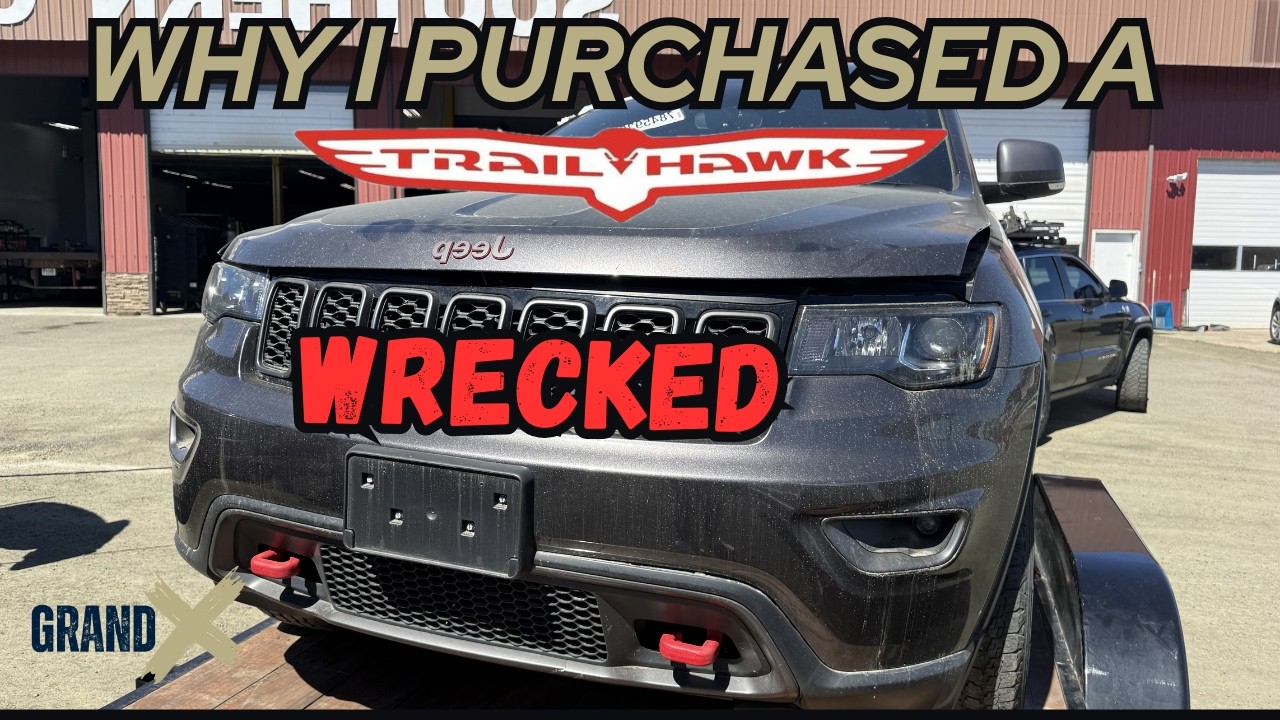
Five hundred dollars. That’s what the wrecked 2018 EcoDiesel Trailhawk cost us. We weren’t after the engine or transmission; those were already gone. We weren’t going to rebuild it. We wanted the factory Quadra-Drive II rear eLSD and enough of the supporting hardware to give Jon’s 2015 Limited on 37s a drivetrain feature it had never been ordered with.
Buying a differential is easy. Buying every last component that lets that differential do its job is where a retrofit can become expensive and irritating. A wrecked donor isn’t pretty, but it comes with connectors, controllers, brackets, wiring ends, and a way to see how the manufacturer actually put the system together.
The donor was in Oregon. Levi found it, arranged a trailer, and we headed south to see whether the rear impact had destroyed the one thing we wanted most.
What we were actually shopping for
Our Limited came with Quadra-Trac II. Its rear axle was an ordinary open differential. An eLSD-equipped Trailhawk uses an actuator-driven rear differential with its own electronic controller. Swapping the assembly is the obvious part. Making it communicate with the Limited’s drivetrain network is the part that can leave the Jeep full of fault codes.
A usable donor needed to give us at least these pieces:
- The electronic limited-slip rear differential itself, with the actuator hardware intact.
- The dedicated eLSD control module and its mounting hardware.
- The factory connector housings and pigtails on both the module and differential sides.
- Axle and related drivetrain parts we could compare to the Limited’s original hardware.
- Enough intact vehicle wiring to establish what went where, even if we ultimately built a new harness.
We also found salvage value elsewhere: Trailhawk wheels, CV hardware, the front differential, steering rack, some interior trim and controls, and an 8-inch infotainment display with Apple CarPlay. The donor happened to be the same body color as the Granite Grand, which made any undamaged exterior pieces worth a second look.
Those were opportunities, not a promise that every Trailhawk part would bolt straight onto an older V6 Limited.
The rear hit was the gamble
This wasn’t a light cosmetic write-off. The Trailhawk had taken a rear impact, so there was an obvious question: was the rear drivetrain still worth salvaging?
At pickup we inspected what we could reach, including the damage, the visible axle hardware and the interior. A hood that initially looked damaged turned out not to have been fully shut. The back of the Jeep wasn’t so forgiving. A crushed rear door was one of the problems we’d deal with again when we returned to remove the electronics.
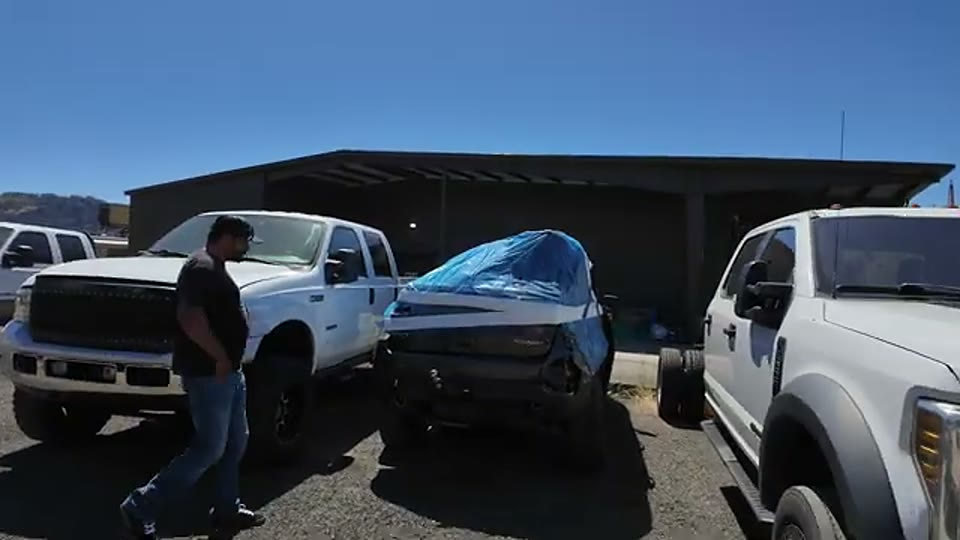
Levi’s trailer made the pickup possible. The trip also provided a reminder that the Granite Grand was not the vehicle to use for this tow: Jon was already fighting an intermittent throttle-position issue and had a replacement throttle body with him. We had one disabled Jeep to retrieve. We didn’t need a second.
The $500 price was attractive, but it didn’t make the condition irrelevant. Had the rear differential been destroyed in the impact, this wouldn’t have been the bargain we thought it was.
Why the diesel gearing wasn’t the whole answer
The eLSD was the priority, not a miracle re-gear. The donor’s 3.45 axle ratio was effectively the same gearing that Jon already had in the Limited, and 3.45s with 37s weren’t the final gearing we wanted.
A future SRT eLSD rear axle with around 3.70 gearing was an interesting idea. That remained a future option, not a part of this $500 swap.
The reasoning was straightforward: get the electronic traction feature working first. Re-gearing or building a straight axle would be its own project. There was no sense making this retrofit depend on solving every other limitation of the vehicle at once.
Save the evidence before you cut the harness
If you’re harvesting a factory electronic feature, the expensive mistake is to bring home a part with its plugs cut off flush.
Our plan was to take the module, connector ends, and enough of the associated loom to map the circuits before building anything new. There is a real distinction between salvaging a complete body harness and salvaging enough information from it. The first can mean hours spent peeling an entire interior apart. The second can mean recovering intact connectors and tracing the circuits you actually need.
We learned why that distinction matters when the 2018 donor’s body connector arrangement didn’t match the 2015 Limited’s. A direct harness transplant was not the clean solution. We instead kept usable factory connector tails and built the missing runs between them.
The full wiring table, CAN pin assignments, power feeds, and programming work are documented separately in the factory eLSD retrofit companion. The take-away from buying the parts Jeep is what made that next step possible: we had the actual module and connector system in hand.
What $500 really bought
A used eLSD assembly alone would still have left us searching for a controller, fitting hardware, and the correct electrical connectors. The donor gave us a complete starting point, plus spares and other useful WK2 parts.
It wasn’t an instant conversion and it wasn’t completely plug-and-play. The rear differential went into the Limited, the custom harness was built, the controller joined CAN, and we used the proper vehicle configuration and eLSD calibration to make it work.
For this kind of project, the donor’s value wasn’t the impressive number of parts we could strip off it. It was having the right parts together, with enough original wiring and installation context to make the factory system work again.
Salvage checklist
Before hauling a parts WK2 home, confirm the rear axle itself is intact, photograph the module labels and connector faces, retain generous pigtail lengths, note the vehicle year and drivetrain, and check the actual axle ratio. Don’t assume same-generation Jeeps share the same electrical architecture.
The recovery story starts with a $500 Trailhawk, but the actual payoff is the working eLSD in the Limited. Those are two separate jobs, and the second one would have been a lot harder without the first.